Landscape painting has always had a shape it likes: wide, low horizon, room for the eye to wander sideways. None of these are that. All nine run tall, portrait, poster-shaped, because that's what a print wants to be, and because animation background painters were never really landscape painters in the gallery sense either. They painted whatever fit behind the character for that scene, panned wide for a chase, stretched vertical when the gag needed you looking up. Calling this catalogue "(landscapes)" is a small joke at its own expense: nine landscapes, and not one of them landscape-shaped.
The genre does have one trick worth borrowing, though. An establishing shot has about two seconds to make a strange place feel instantly livable, so it leaves out anything that would slow you down. Bedrock's quarry reads as cheerful because nobody paints the mineral rights. Jellystone reads as safe because nobody paints the Ranger's surveillance budget. Whatever a premise actually runs on tends to stay just out of frame, since the whole job of an establishing shot is to stop you from asking.
So these put it back in. Nine cartoon backdrops, each painted the way its own studio actually painted its backgrounds, each one now carrying the single piece of real infrastructure its premise always quietly needed and never showed: a mine under Bedrock, a camera rig over Jellystone, a checkpoint at the edge of South Park. Nothing else in the frame is touched. Nobody in the story ever finds out.
Titles are drawn from a sound each show is known for rather than whatever's written on the sign, mostly because a cartoon's noises tend to outlive its scenery in anyone's memory. "Meep Meep" has done more work for the Road Runner over the decades than any painted mesa ever will.
Nothing falls until it looks down and notices there's nothing under it.
A painted tunnel is a wall only for the character who didn't paint it.
The background loops for free long after the studio stops paying for new footage.
Each plate keeps one reference show's landscape fully intact, in its own studio's palette and linework, and adds exactly one piece of real infrastructure or signage the premise had always left standing just out of frame.
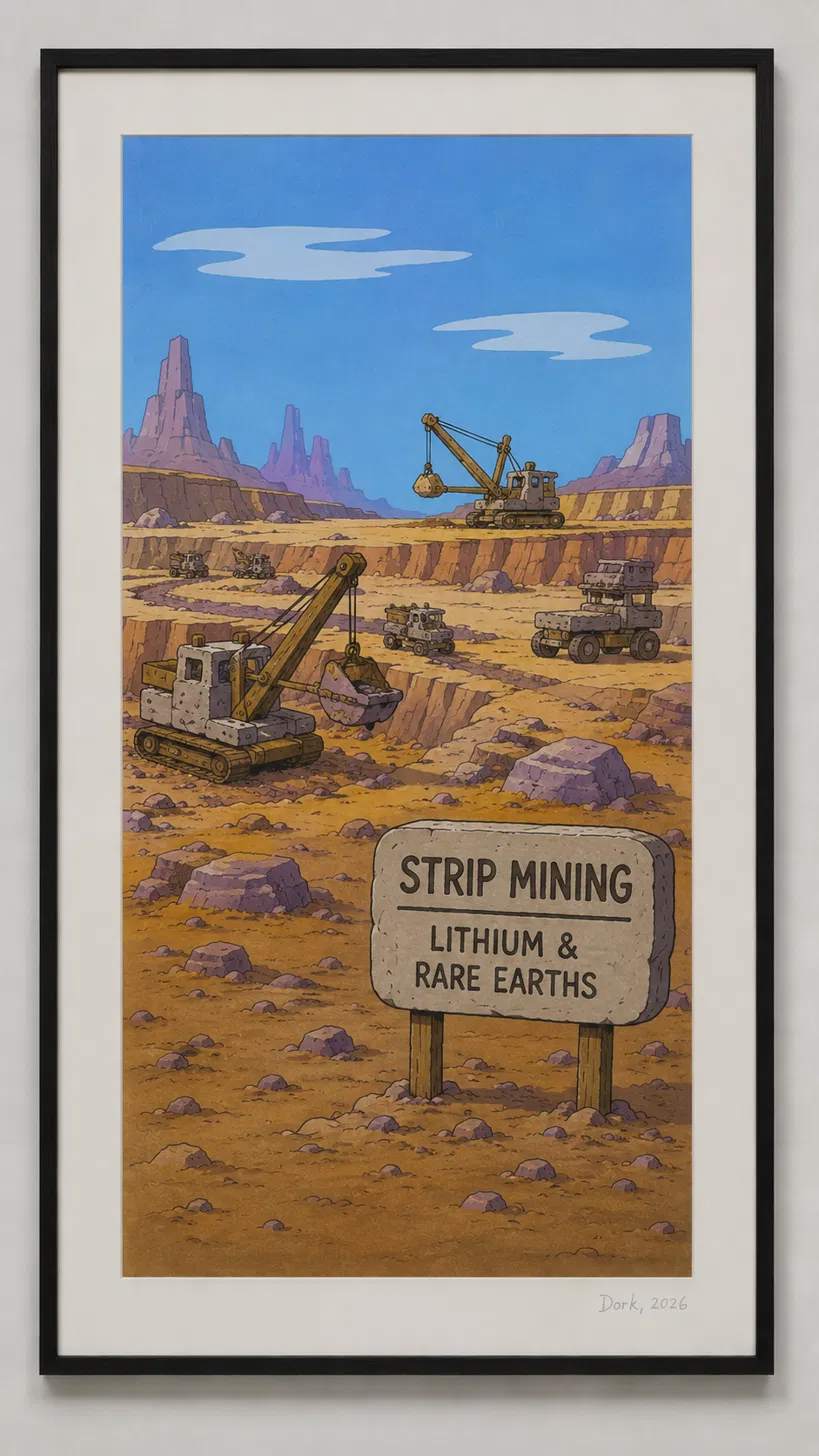
Bedrock's boulder-powered household finally gets its supply chain drawn in: an open-pit operation under the same purple mesas that used to just sit there looking prehistoric.
DORK.LS.2026.001 after The Flintstones
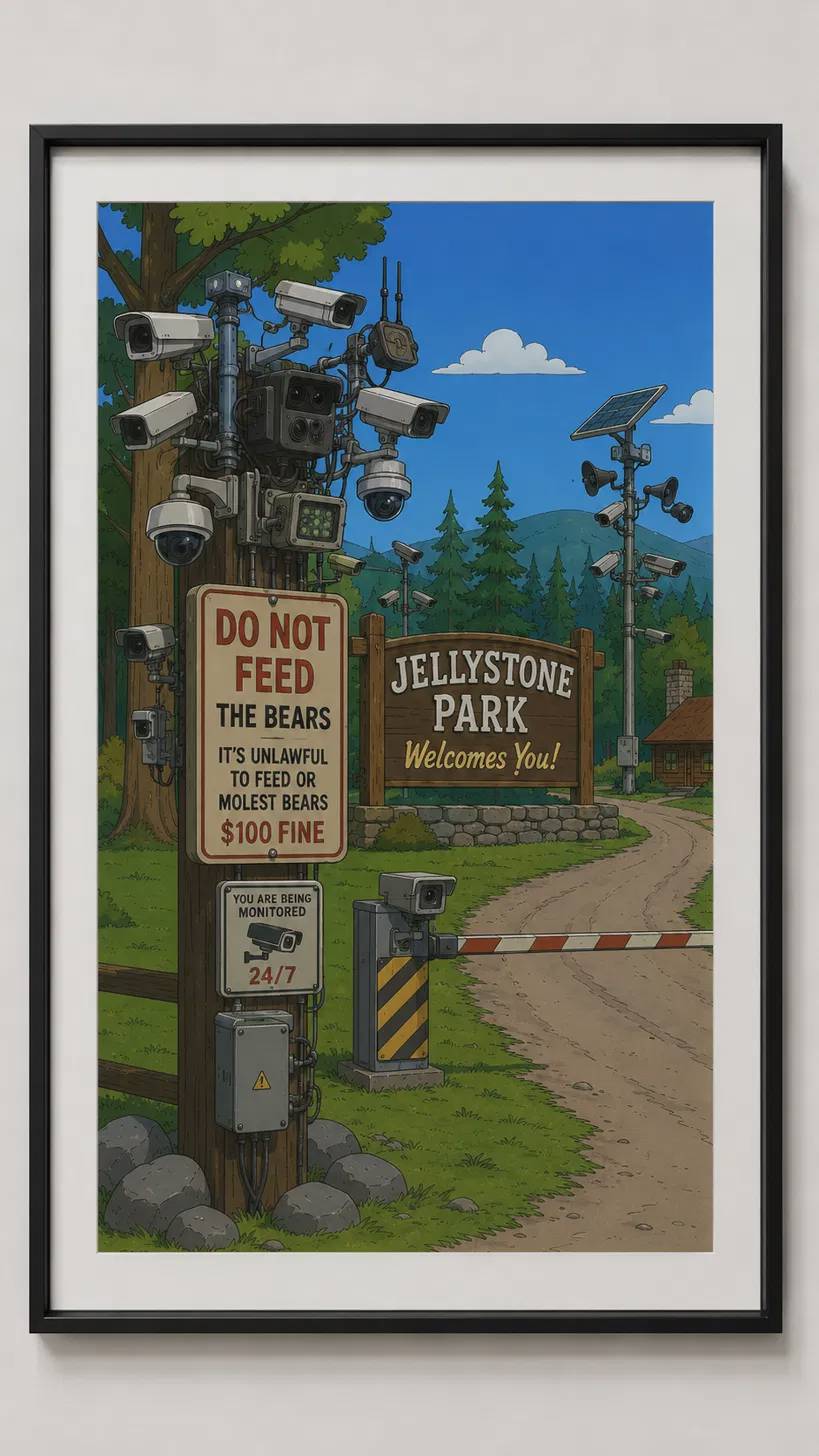
A park built around one bear's appetite for picnic baskets now runs on a surveillance budget the Ranger never had to justify to anyone.
DORK.LS.2026.002 after Yogi Bear / Jellystone Park
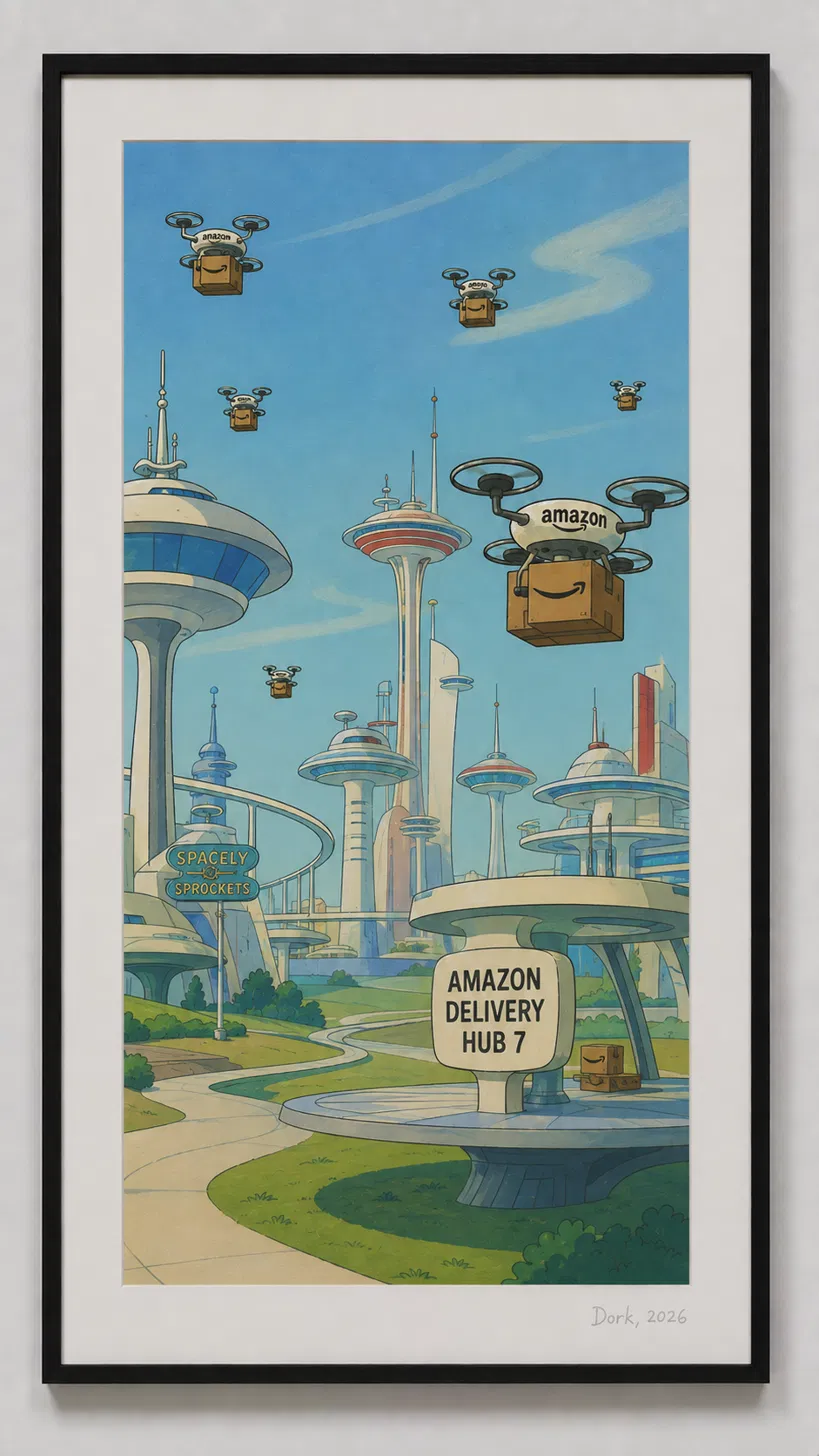
The flying-car future arrived roughly on schedule, just re-routed through a fulfillment hub with somebody else's logo on the building.
DORK.LS.2026.003 after The Jetsons
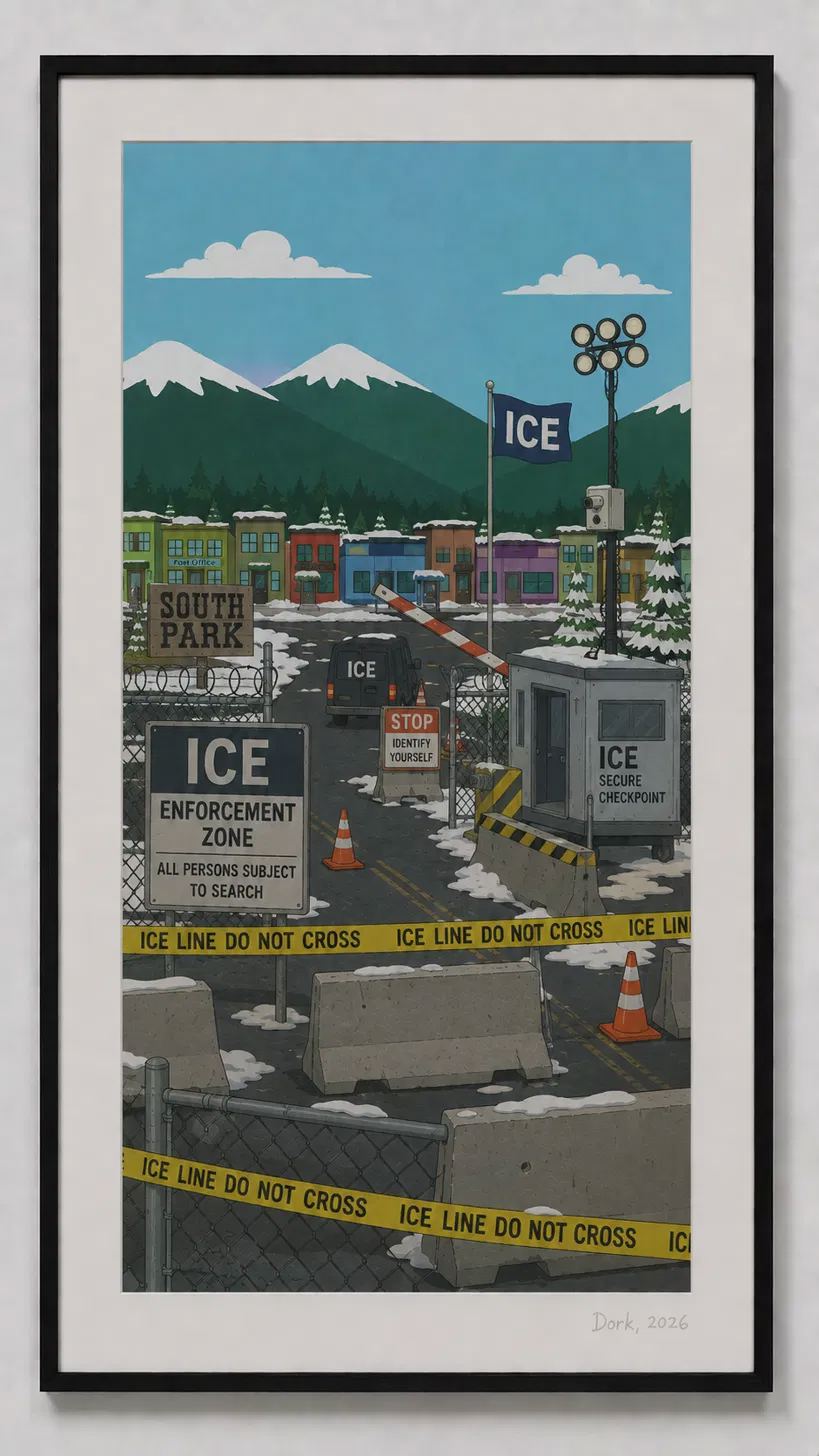
The town's usual move, something grim rendered in construction-paper cheerfulness, repointed at an actual checkpoint instead of an invented one.
DORK.LS.2026.004 after South Park
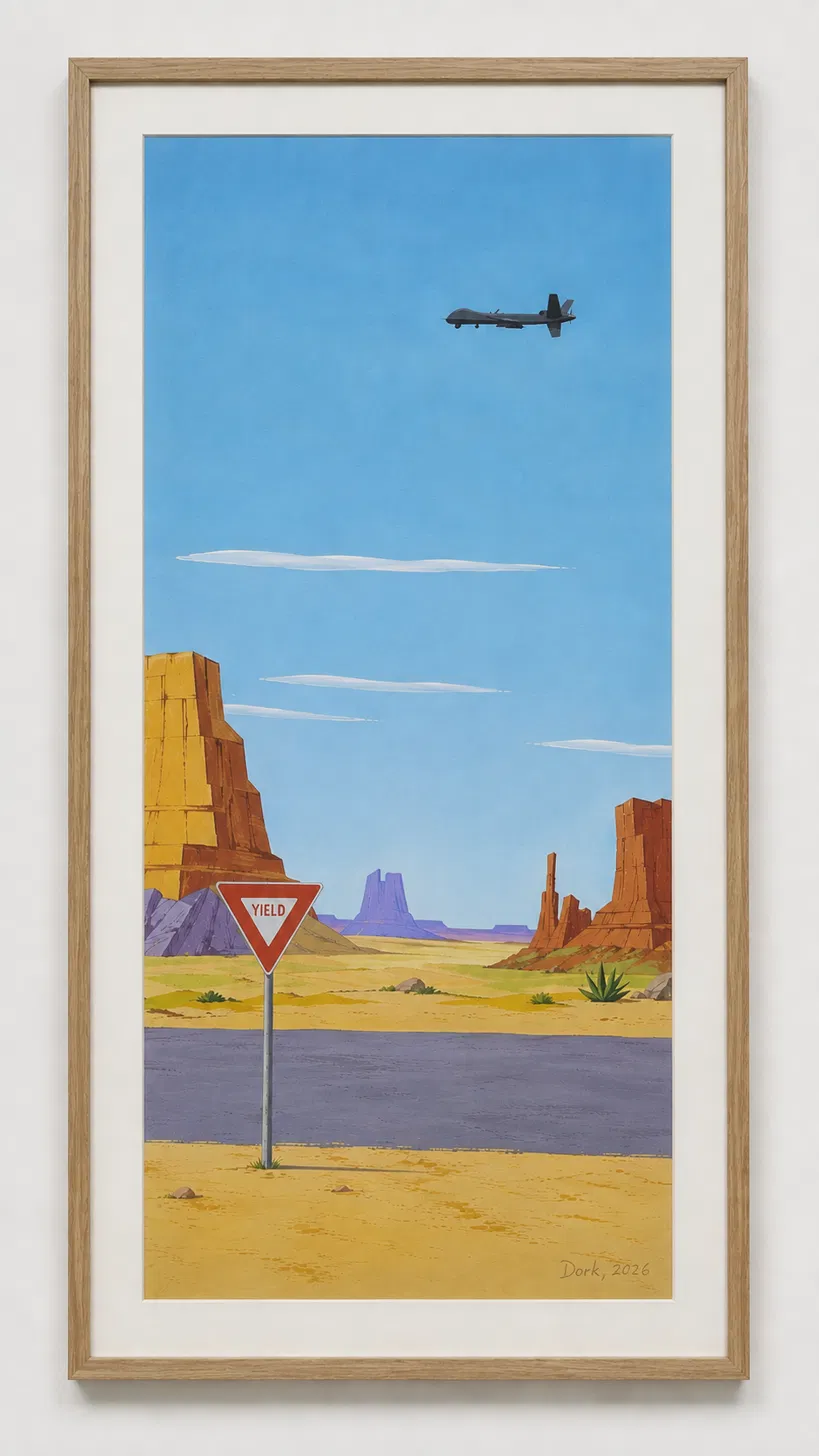
The usual overhead hazard was an anvil, off-catalog and always late. This one flies itself and doesn't miss on the fourth try.
DORK.LS.2026.005 after Road Runner / Looney Tunes
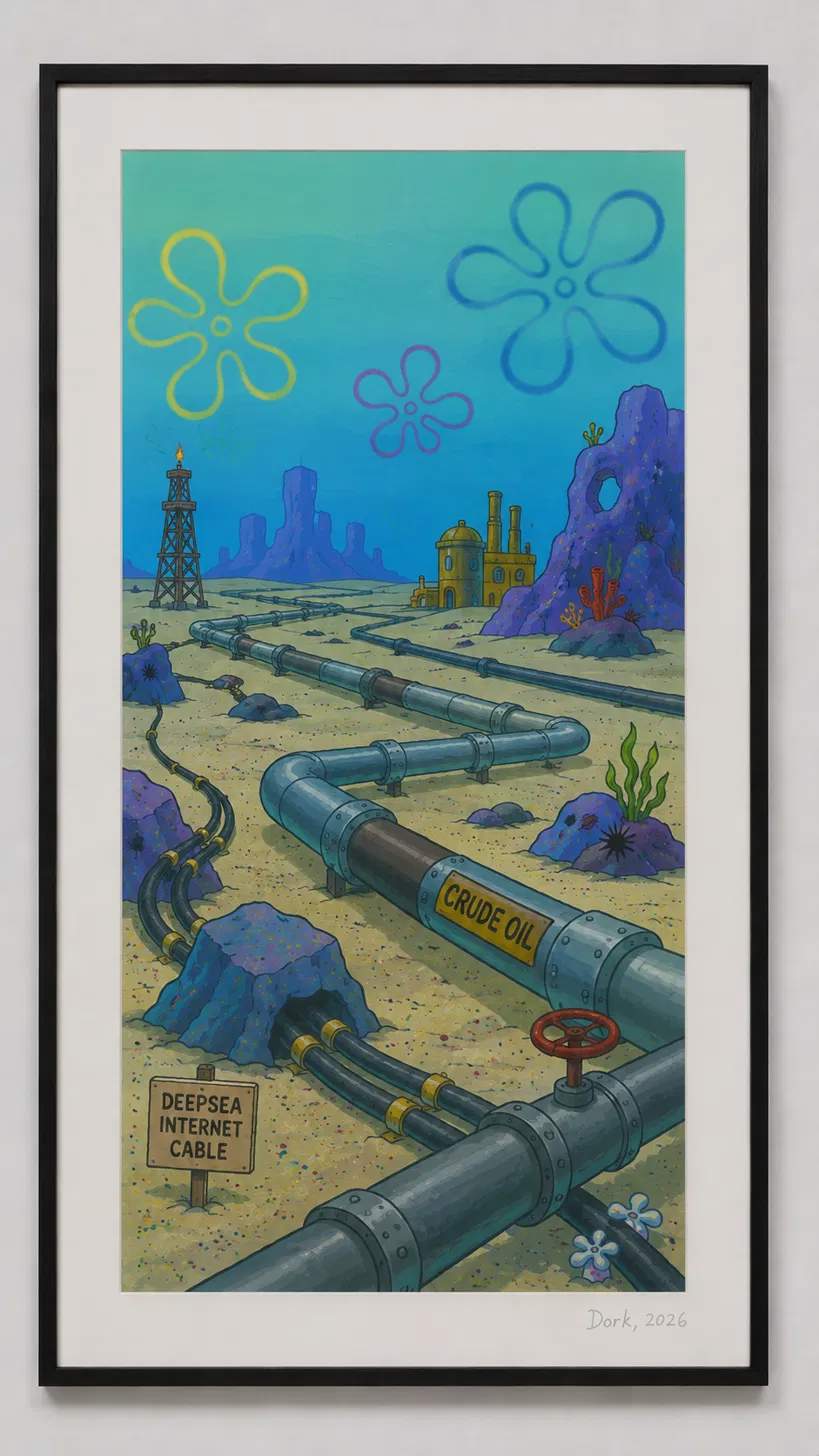
Bikini Bottom's tidy municipal seabed doubles as a right-of-way for the two systems that actually run everything on land above it.
DORK.LS.2026.006 after SpongeBob SquarePants
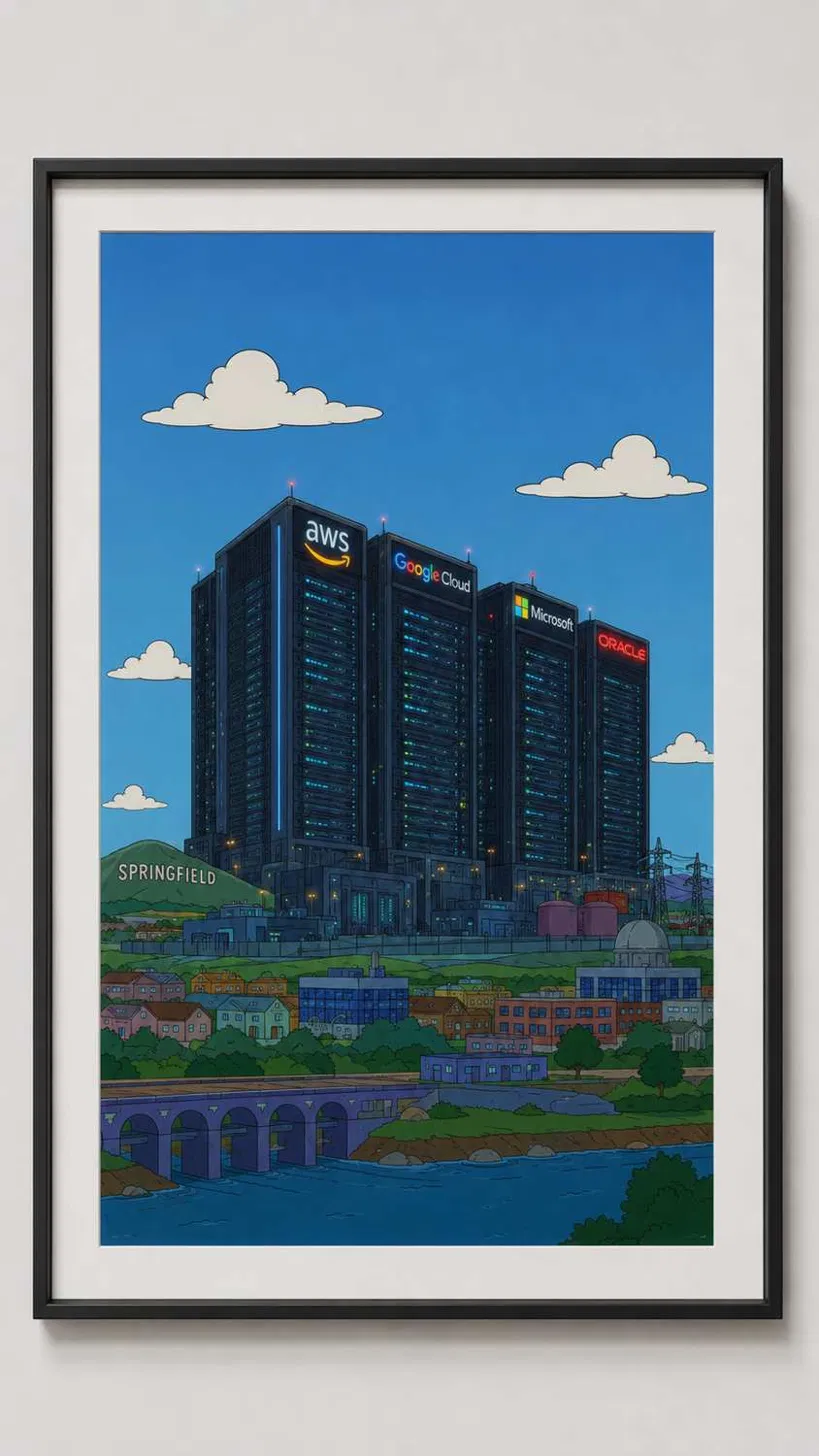
The nuclear plant on the ridge, long the town's one honest employer, quietly out-scaled by four buildings that don't need Homer at all.
DORK.LS.2026.007 after The Simpsons
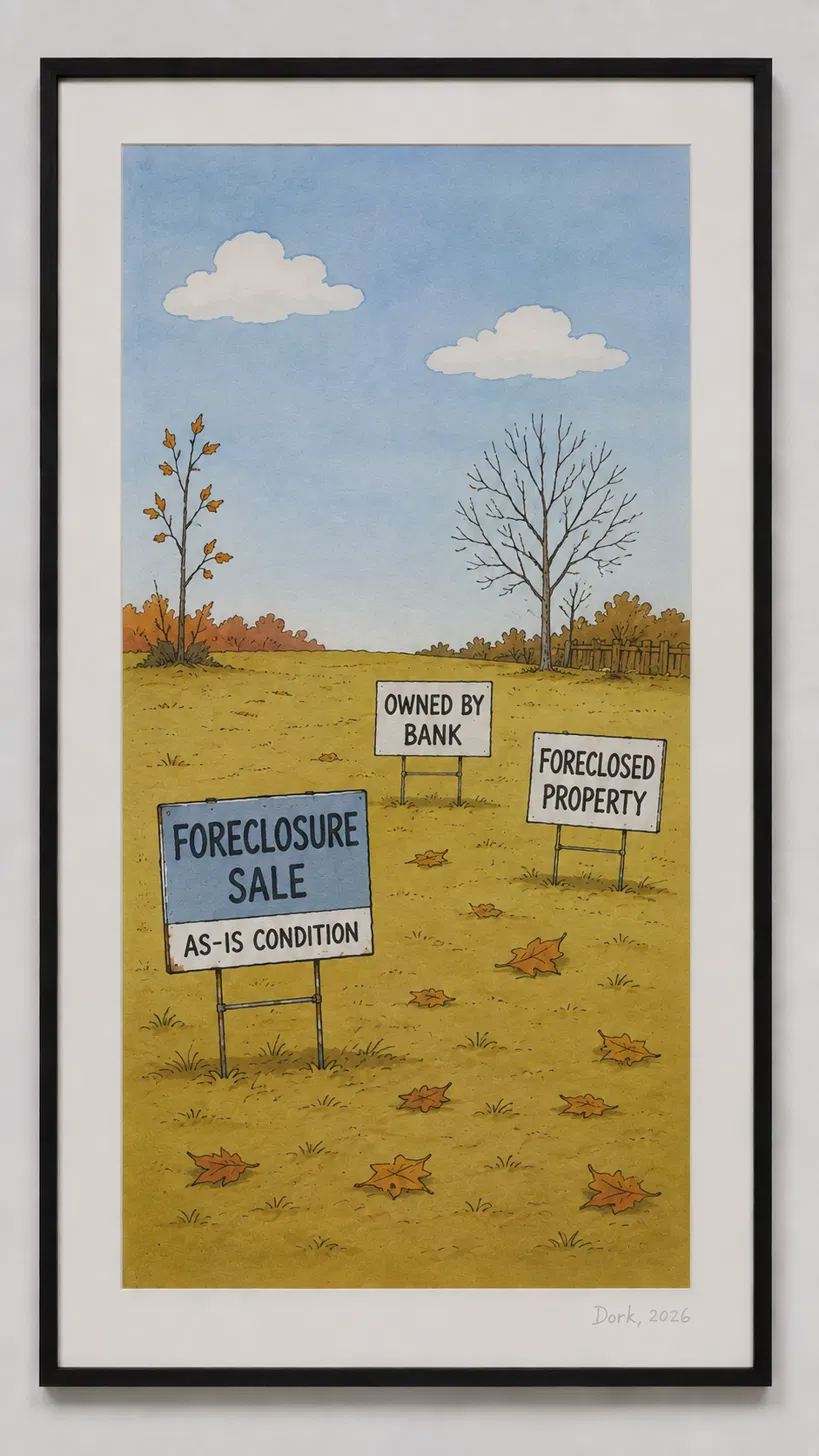
The adult voice the strip never let you hear finally gets something to say, and it's exactly the paperwork you'd expect.
DORK.LS.2026.008 after Peanuts
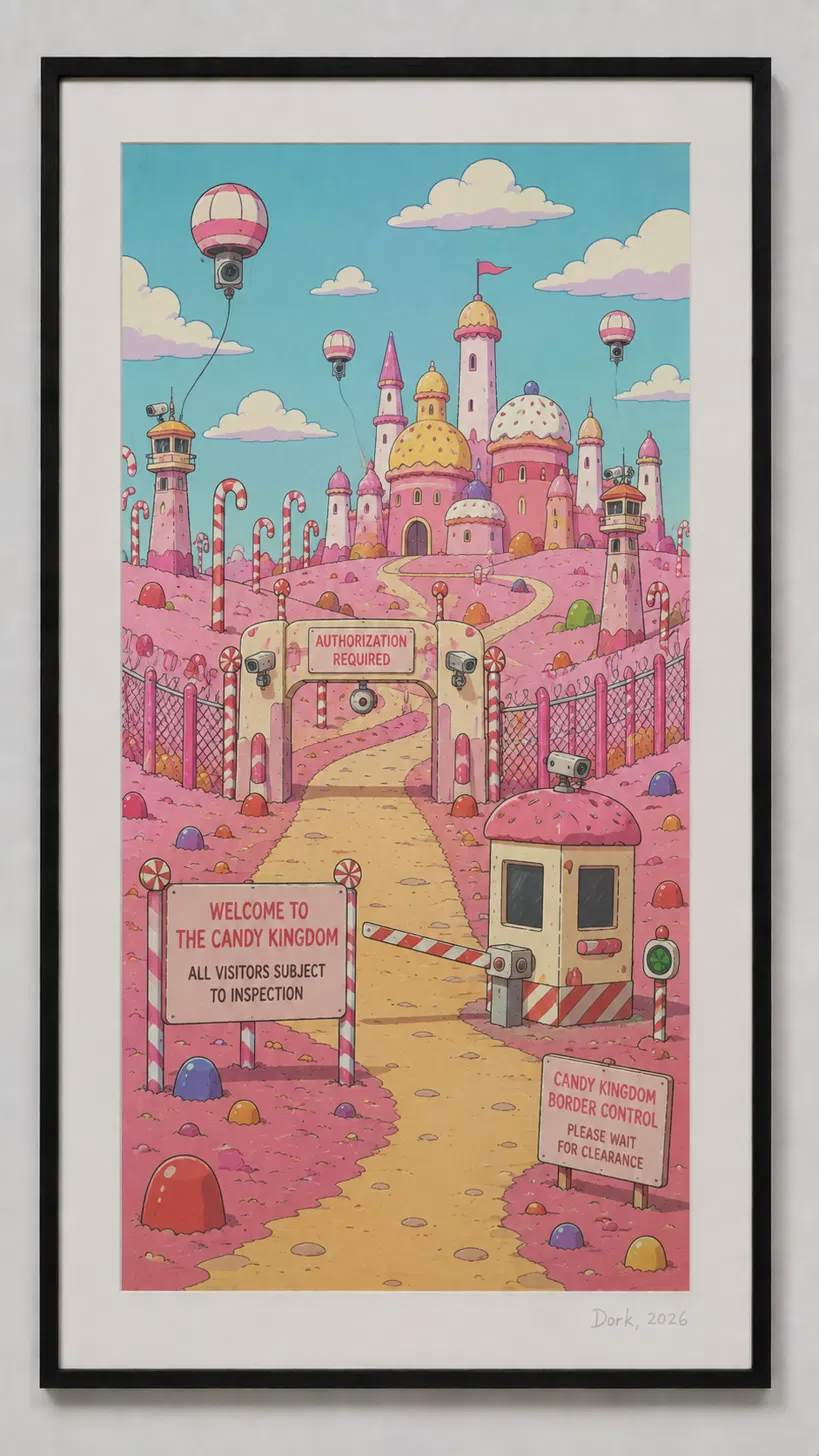
A land ruled by a candy scientist-princess turns out to run the tightest border control in the catalogue.
DORK.LS.2026.009 after Adventure TimeThe process was simple to describe and fussier to actually pull off. Keep a reference show's establishing shot completely intact, down to its studio's own linework and color logic, then drop in exactly one piece of real signage or hardware that the setting had always technically needed. Nothing else in the composition gets a pass to change because of it.
Picking the nine came down to which shows have a landscape you'd recognize with the sound off: the mesa behind the Road Runner, the tract houses over Homer's shoulder, the tree line around Jellystone. What each one hosts was chosen to track the economics the cartoon was quietly running on the whole time, a mine under a rock-powered household, border control under a kingdom ruled by a candy scientist, cloud towers over a town that used to get by on one nuclear plant and Homer.
A generative model did the actual painting, worked and re-worked toward the flat cel-and-gouache look each studio used for its own backgrounds. That's a tool doing a tool's job, the same way a camera did the exposing on a Becher typology without becoming the subject of it. The frame is the point here, not what rendered it.